
Peripheral vision
PERIPHERAL VISION
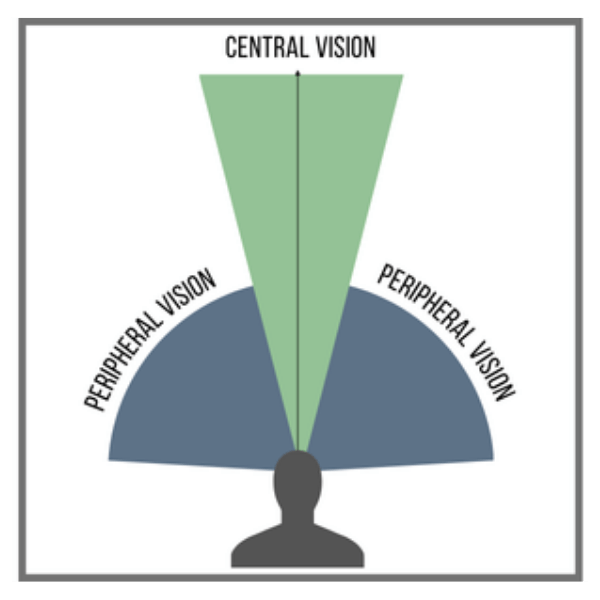
Everyone knows it, everyone has done it. “Peripheral vision” is a form of visual perception. Colloquially, we look “out of the corner of our eye”. Physically, this expression is absolutely correct, because in peripheral vision it is not the central part of our retina that is active, but the adjacent areas.
Our retina consists of various sensory cells, also known as photoreceptors. The light-sensing cells of the retina consist of rods (light-dark receptors) and cones (color receptors).
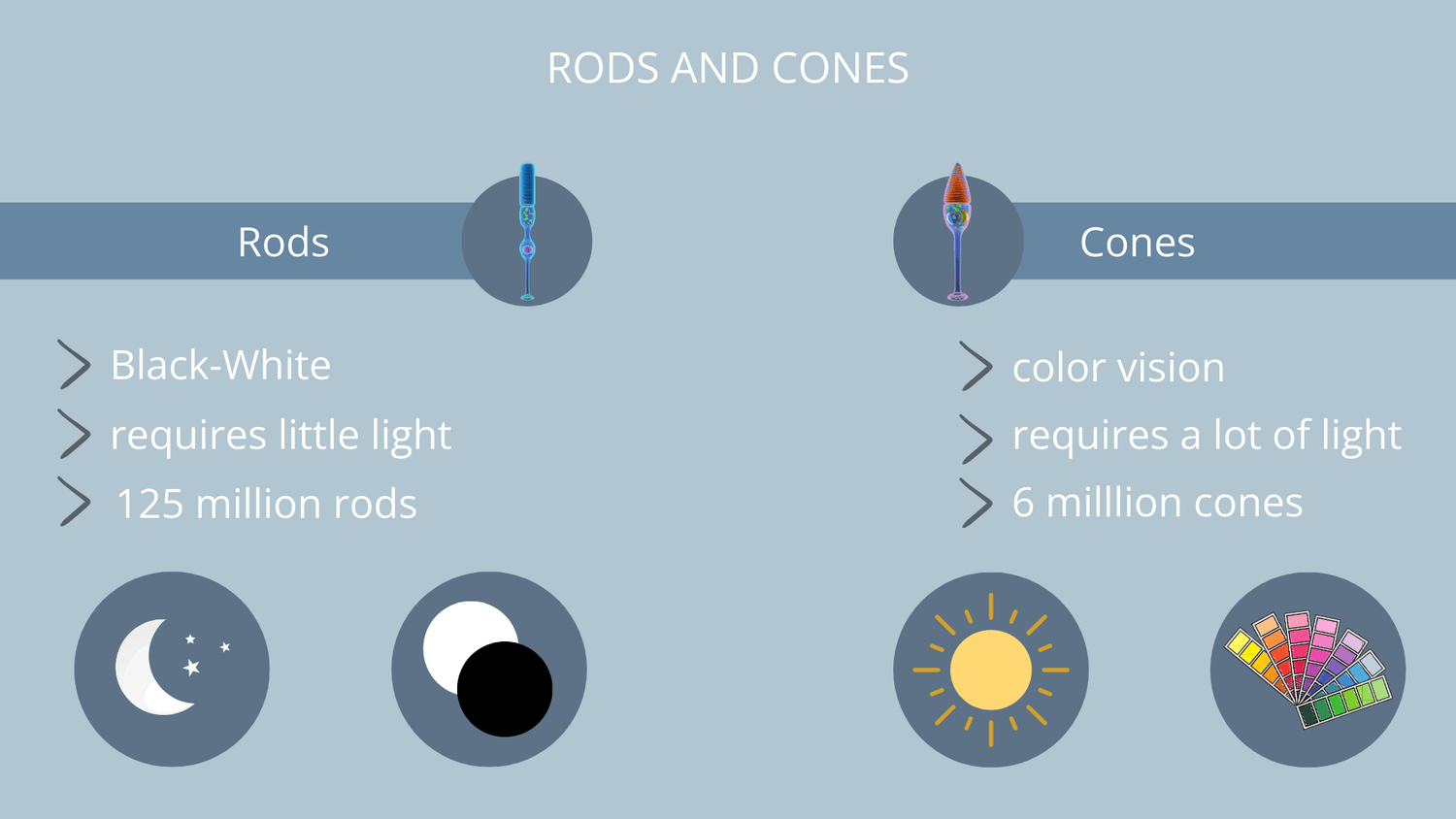
Rods and cones
The central part of our retina is called the optic pit and consists of a high density of cones. The cones are responsible for sharp and color vision. The higher their density, the better the resolution. This is where central vision takes place.
Outside the visual cortex, the number of our cone cells decreases. They are replaced by rod cells. These are only able to distinguish between light and dark. Our vision, which becomes increasingly blurred from the optic pit towards the edge of the retina due to the decreasing density of sensory cells, is responsible for the perception of light and dark and movement. It is called “peripheral vision”.
Nowadays, we largely ignore this form of vision. We usually concentrate on one thing so that we are not distracted and can see everything clearly. This leads to our eyes being used quite one-sidedly, also known colloquially as “tunnel vision”. In doing so, we overload the central part of the retina, the visual cortex.
Why is peripheral vision so important?
Peripheral vision is still very important. It supports our visual perception in poor lighting conditions due to the high number of light-dark sensitive rods on the periphery of the retina.
In relaxed, natural vision, attention oscillates between “central” and “peripheral” vision. The center of perception is thus captured selectively and sharply at the periphery globally. The interplay creates an overall impression.
This indirect vision is therefore useful in extremely low light conditions, when seeing at dusk and at night.
Note, however, that these sensory cells need between 40 and 45 minutes to adapt to a change in light. You can improve the sensitivity of these receptors and therefore your ability to see in the dark with training and a healthy lifestyle.
Tip for peripheral vision
Train your peripheral vision - in addition to the exercises - with an occasional walk in the dark, but this should exceed 40-45 minutes to really achieve a training effect.
Good “peripheral vision” maintains the health of our eyes and our eyesight, as the areas of the entire retina are used evenly and therefore there is no over- or under-straining of individual areas.
How does peripheral vision help me?
Peripheral vision is also indispensable in sport, especially in team sports. For example, if a basketball player has good peripheral vision, he can recognize teammates and opponents in the vicinity even at high speeds and plan the next move.
In relaxed, natural vision, attention oscillates between “central” and “peripheral” vision. The center of perception is thus captured selectively and sharply and the periphery globally. The interplay creates an overall impression.
This is how you train peripheral vision
Below we have an exercise to improve your peripheral vision:

Sit down comfortably and look at something in the distance.
Now bring your hands 10-20 centimetres to the side of your head at eye level so that your fingers are pointing towards you and your wrists are loose.
Now start waving your hands on both sides while continuing to look into the distance. But let your eyes recognize the movement of your hands.
Wave your hands forward and then back again.
Do this exercise for one to three minutes.
You can do this exercise anytime and anywhere.

INFORMATION
93% of our members recommend us!


*The rate of success from vision training is different from individual to individual and is not guaranteed.